
Hear from Our Customers
Phoenix hit 100°F for a record 113 days in 2024. Cooling costs for Maricopa County residents have climbed roughly 17% since 2000, and if you have a flat or low-slope roof with no real thermal barrier between you and that heat, you’re paying for it every single month. Spray foam roofing seals your roof into a single, unbroken layer of insulation — no seams, no gaps, no shortcuts. The result is a measurable drop in how hard your HVAC has to work, and for most Phoenix homeowners, that translates to real savings on every summer utility bill.
Then there’s monsoon season. From July through September, the Valley gets hit with storms that can dump inches of rain in under an hour. Every seam, fastener, and joint on a traditional flat roof is a potential entry point when that water comes fast and heavy. A foam roof has none of those. It’s one continuous surface, and water simply has nowhere to get in. For neighborhoods like Maryvale, Laveen, and Ahwatukee — where flat-roof homes are common and the stakes of a bad storm are high — that kind of protection isn’t a luxury. It’s the point.
Beyond the immediate benefits, foam roofing in Phoenix is also a long-term play. A properly maintained foam system can outlast multiple shingle replacements, often lasting 30 or more years with routine recoating. You stop cycling through repairs and start owning a roof that actually holds up to what Phoenix throws at it year after year.
We’ve been working in Maricopa County since 1999. That means we were here through the building boom, the 2008 crash when a lot of contractors quietly disappeared, and the current wave of out-of-state operators chasing Phoenix’s growth. We’re still here because we do the work right the first time.
We hold a Certified Master Roofer designation, an Arizona ROC C-42 license that specifically authorizes urethane foam installation, and manufacturer certifications from GAF and Firestone. We also use thermal imaging during inspections — which matters in Phoenix because heat and moisture damage can hide beneath a surface that looks completely fine to the naked eye. If there’s a problem under your roof, we find it before it becomes your problem.
Our 25-year workmanship warranty covers the installation itself — not just the materials. That’s a distinction worth understanding. A lot of contractors will point you to the manufacturer’s warranty and call it a day. We stand behind the quality of our own work for a quarter century. In a market as competitive and crowded as Phoenix, that kind of accountability is something you should ask every contractor about before you sign anything.
It starts with an inspection — and not a quick visual once-over. We use thermal imaging to assess your current roof’s condition, identify any hidden moisture or substrate issues, and determine whether your existing surface is a good candidate for foam overlay. In most cases, flat and low-slope roofs in Phoenix are exactly that. Skipping this step is how bad installations happen, and we don’t skip it.
Once the assessment is complete and you understand what you’re working with, we handle the permit process with the City of Phoenix. Full foam roof installations require a building permit here, and any contractor telling you otherwise is cutting corners that will eventually cost you. Phoenix’s building code references the International Building Code with Arizona-specific amendments, including wind uplift standards built for the kind of gusts that come with monsoon thunderstorms. We know these requirements and we build to them.
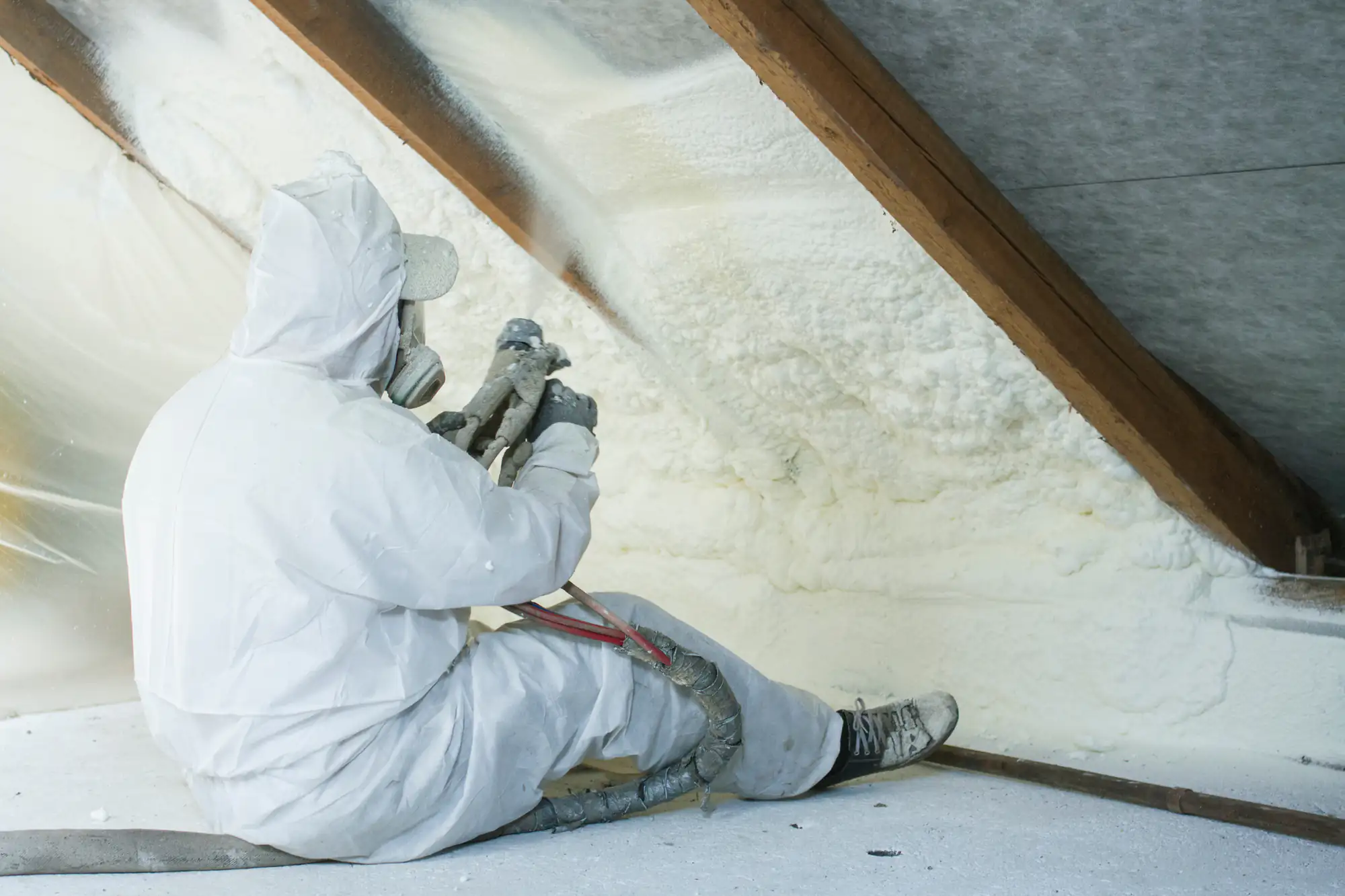
Installation itself involves surface preparation, application of the spray polyurethane foam to the correct thickness, and finishing with a high-reflectance elastomeric coating that protects the foam from UV degradation and qualifies your roof as a cool roof system under Phoenix’s own heat mitigation guidelines. Fall and spring are the ideal installation windows in Phoenix — temperatures are moderate, conditions are stable, and you’re set up before the next monsoon season hits. That said, Phoenix’s mild winters mean we can work year-round when the schedule calls for it.
Ready to get started?
Whether you own a mid-century ranch in Arcadia, a flat-roof home in Maryvale, or a commercial building near Sky Harbor, the core service is the same: a professionally installed spray polyurethane foam roofing system that seals your roof completely, insulates it to R-6 or R-7 per inch, and holds up to Phoenix’s extreme UV exposure, summer heat cycles, and monsoon-driven rainfall.
For residential properties, foam roofing in Phoenix is particularly well-suited to the flat and low-slope roof sections that are standard in desert architecture across Phoenix’s 15 urban villages. We assess your existing roof, prepare the substrate, apply the foam, and finish with an elastomeric coating rated for high-reflectance performance. In most cases, we can install directly over your existing roof — no tear-off, no landfill fees, no structural disruption.
For commercial property owners in Phoenix, the math is straightforward. When HVAC accounts for 40 to 60 percent of your building’s total energy costs during summer, a foam roof that reduces that load pays for itself. We work with retail centers, medical offices, warehouses, and multifamily properties across Maricopa County. Every commercial installation includes a detailed inspection report, permit documentation, and the same 25-year workmanship warranty that covers our residential work. Financing is available for both residential and commercial projects — because the upfront cost shouldn’t be the reason you keep putting this off.
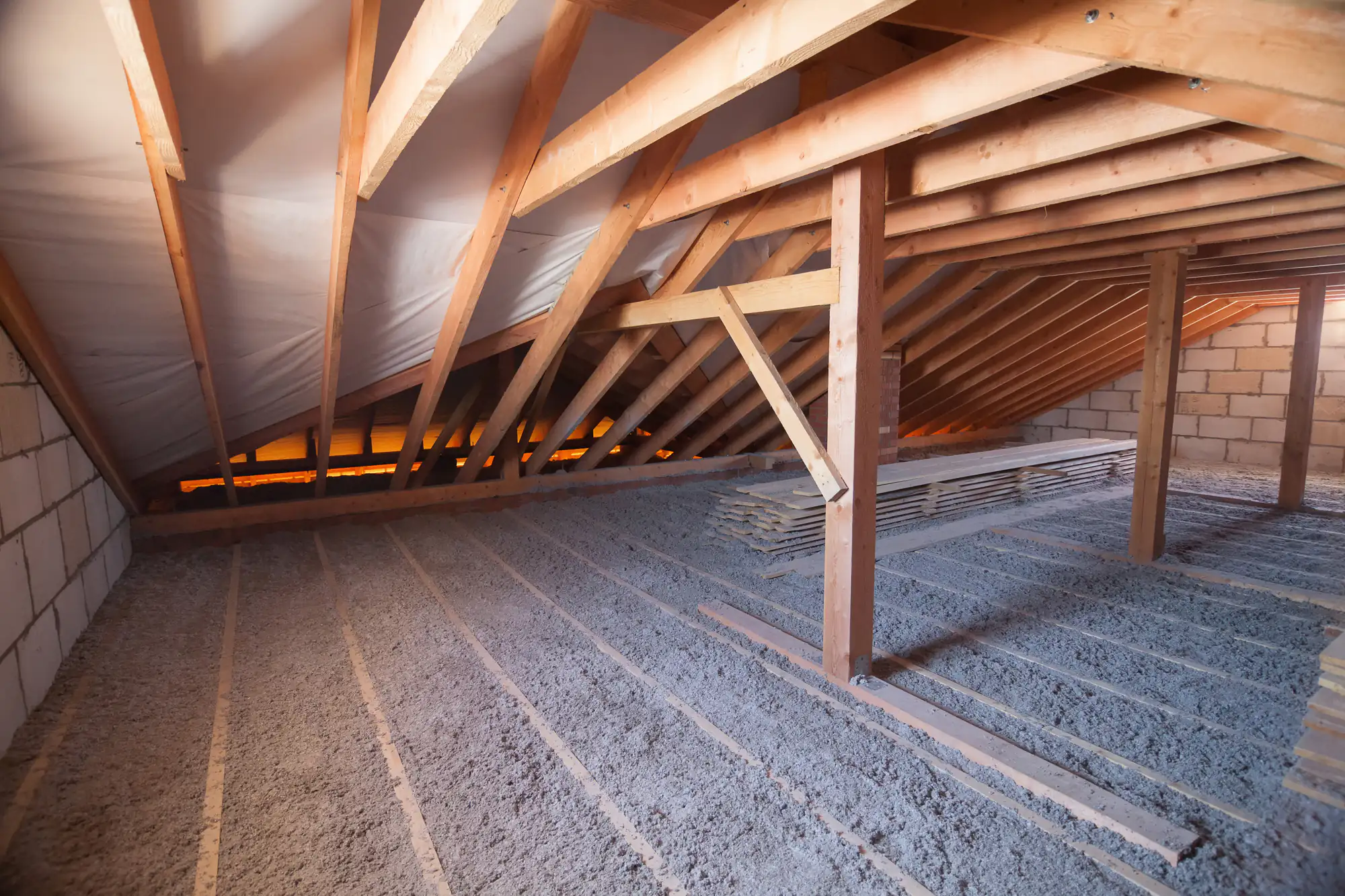
A properly installed and maintained foam roof in Phoenix can last 30 to 50 years or more. The key word there is maintained — foam roofing systems need to be recoated periodically to protect the foam layer from UV degradation. In Phoenix’s climate, with its relentless sun and intense UV index, most foam roofing specialists recommend recoating every five to seven years. That’s a straightforward maintenance cycle compared to replacing a shingle roof every 12 to 15 years, which is the realistic lifespan for asphalt shingles under Phoenix’s heat and UV conditions.
The recoating process is far less disruptive and far less expensive than a full roof replacement. You’re essentially refreshing the protective layer that shields the foam from the elements — not starting over. Over a 30-year period, the total cost of ownership for a foam roof in Phoenix is typically lower than cycling through two or three conventional roof replacements, especially when you factor in the energy savings that compound every summer.
Yes — and this is actually one of the strongest arguments for foam roofing in Phoenix specifically. Monsoon season runs from July through September and brings sudden, intense storms with high winds, heavy rainfall, and occasionally hail. Traditional flat roofing systems — modified bitumen, built-up roofing, even some TPO installations — have seams, joints, and fasteners that can fail under rapid water accumulation. Foam roofing is applied as a liquid and cures into a single, seamless membrane. There are no seams for water to exploit, no fasteners to back out, no joints to separate under wind pressure.
The elastomeric coating applied over the foam also adds a layer of flexibility that handles the thermal expansion and contraction that Phoenix roofs go through daily — extreme heat during the day, significant cooling at night. That flex resistance matters during monsoon events when temperature swings happen fast. For flat-roof homes in neighborhoods like Laveen, Ahwatukee, and South Phoenix — where storm drainage can be slow and water sits on roofs longer — that seamless waterproofing is exactly what you need.
Yes. Full foam roof installations in Phoenix require a City of Phoenix building permit. This applies whether you’re doing a complete foam system on a new build or overlaying foam on an existing flat roof. The permit process involves plan submission, review, and a final inspection once the work is complete. Any contractor who tells you a permit isn’t necessary for a full foam installation is either misinformed or cutting corners — and either way, that’s a problem you’ll inherit when you go to sell the property or file an insurance claim.
Phoenix’s building code references the International Building Code with Arizona-specific amendments, including wind uplift resistance standards designed for the high-wind events that accompany monsoon storms. These aren’t bureaucratic formalities — they exist because Phoenix’s weather conditions are genuinely demanding and roofs need to be built accordingly. We handle the permit process as part of every installation. You don’t need to navigate the City of Phoenix permitting office on your own.
For a typical Phoenix residential property with a flat or low-slope roof, foam roofing installation generally runs between $4 and $8 per square foot installed, which puts a standard-sized home in the $7,000 to $12,000 range depending on the roof’s current condition, size, and what prep work is needed before foam can be applied. Commercial properties in Phoenix are typically priced in the $5 to $10 per square foot range, with larger buildings benefiting from economies of scale.
Those numbers need to be weighed against what you’re currently spending. A Phoenix homeowner paying $400 or more per month in summer electric bills — which is common in homes without adequate roof insulation — can realistically see 25 to 35 percent reductions in cooling costs after a foam installation. On a home with a $4,800 annual summer cooling bill, that’s roughly $1,200 to $1,700 back per year. The roof often pays for itself within four to six years, and then continues generating savings for decades. Financing is available through us for both residential and commercial projects if the upfront investment is a barrier.
In most cases, yes — and that’s one of the practical advantages of foam roofing for Phoenix property owners. If your existing roof deck is structurally sound and free of trapped moisture, foam can be applied directly over the existing surface. That eliminates tear-off costs, landfill fees, and the labor involved in a full removal — which can add thousands of dollars to a conventional roof replacement. For Phoenix’s large inventory of older flat-roof homes, particularly in neighborhoods like Maryvale, Central Phoenix, and the mid-century commercial corridors along Grand Avenue, this overlay capability is a meaningful cost advantage.
The critical step before any overlay is a thorough inspection — and in Phoenix, that means thermal imaging, not just a visual assessment. Heat and moisture damage can exist beneath a roof surface that looks acceptable on the outside. If moisture is trapped in the existing roofing layers and foam is applied over it, that moisture becomes a long-term problem. We use thermal imaging on every pre-installation inspection to confirm the substrate is dry and sound before we apply anything. If there’s a problem, we tell you exactly what it is and what the options are.
Go to roc.az.gov and search the contractor’s name or license number before you sign anything. The Arizona Registrar of Contractors C-42 Roofing License specifically lists urethane foam as a covered classification — meaning the license has to explicitly authorize foam roofing, not just general roofing work. Installing foam roofing in Phoenix without this license is illegal, and the consequences of hiring an unlicensed contractor fall on you as the property owner: voided warranties, failed inspections, and potential liability issues if the work causes damage.
Phoenix has a large and active contractor market, and the barrier to advertising roofing services is low. That means the quality gap between contractors is wider here than in smaller markets. Beyond the ROC license, ask specifically about the C-42 classification, ask for proof of general liability and workers’ compensation insurance, and ask whether the contractor will pull the required City of Phoenix building permit. A contractor who hesitates on any of those questions is telling you something important. Our ROC license, insurance documentation, and permit process are all straightforward — we expect you to ask, and we have the answers ready.
Other Services we provide in Phoenix