
Hear from Our Customers
Litchfield Park sits in one of the most thermally aggressive climates in the country. Redfin data confirms 99% of homes here carry an Extreme Heat Factor® rating, and projections show a 171% increase in days over 114°F over the next 30 years. That’s the direction your next summer electricity bill is already heading. Spray foam roofing creates a seamless, monolithic barrier that insulates at R-6 to R-7 per inch — the highest available in any roofing material — while sealing every gap that heat and conditioned air currently exploit. For a typical home in Litchfield Park, that translates to roughly $960 per year in energy savings, with a payback period of under four years.
But energy costs aren’t the only thing foam roofing solves here. Litchfield Park’s older housing stock — particularly the historic homes near Old Town that date back to the Goodyear Tire era — was built with flat and low-slope roofs that are inherently vulnerable to monsoon water infiltration. Every July through September, those roofs get tested. Conventional flat roofing systems have seams, joints, and fasteners — and the monsoon finds all of them. Foam roofing has none of those. It bonds directly to the substrate and cures into a single, continuous surface with no penetration points for water to exploit.
After installation, the difference is straightforward: lower cooling bills, no monsoon leaks, and a roof you stop thinking about. That’s what a properly installed SPF roofing system actually delivers.
We’ve been operating in Maricopa County since 1999, which means we’ve been installing roofs in Litchfield Park and the West Valley through multiple monsoon seasons, multiple economic cycles, and the full arc of the region’s growth from desert scrub to one of the fastest-expanding metro areas in the country. When a storm-chasing contractor rolls into Litchfield Park after a bad monsoon and disappears six months later, we’re still here.
We hold a Certified Master Roofer designation, manufacturer certifications from GAF and Firestone, and an Arizona ROC license that covers urethane foam roofing installation — verifiable at roc.az.gov. Our 25-year workmanship warranty covers the quality of the installation itself, not just the materials. No competitor currently ranking for foam roofing in Litchfield Park offers a workmanship warranty that comes close to that length.
Litchfield Park is a small city — fewer than 7,000 residents, 3.3 square miles — and reputation travels fast in a community this size. We take that seriously.
It starts with a thorough roof inspection, and in Litchfield Park, that inspection includes thermal imaging. This matters more here than in newer communities because the city’s older homes — particularly those in and around Old Town Litchfield Park — are more likely to have hidden moisture trapped in the existing roof substrate. Applying foam over a wet or compromised substrate is one of the primary causes of foam roof failure, and thermal imaging catches that before installation begins, not mid-project.
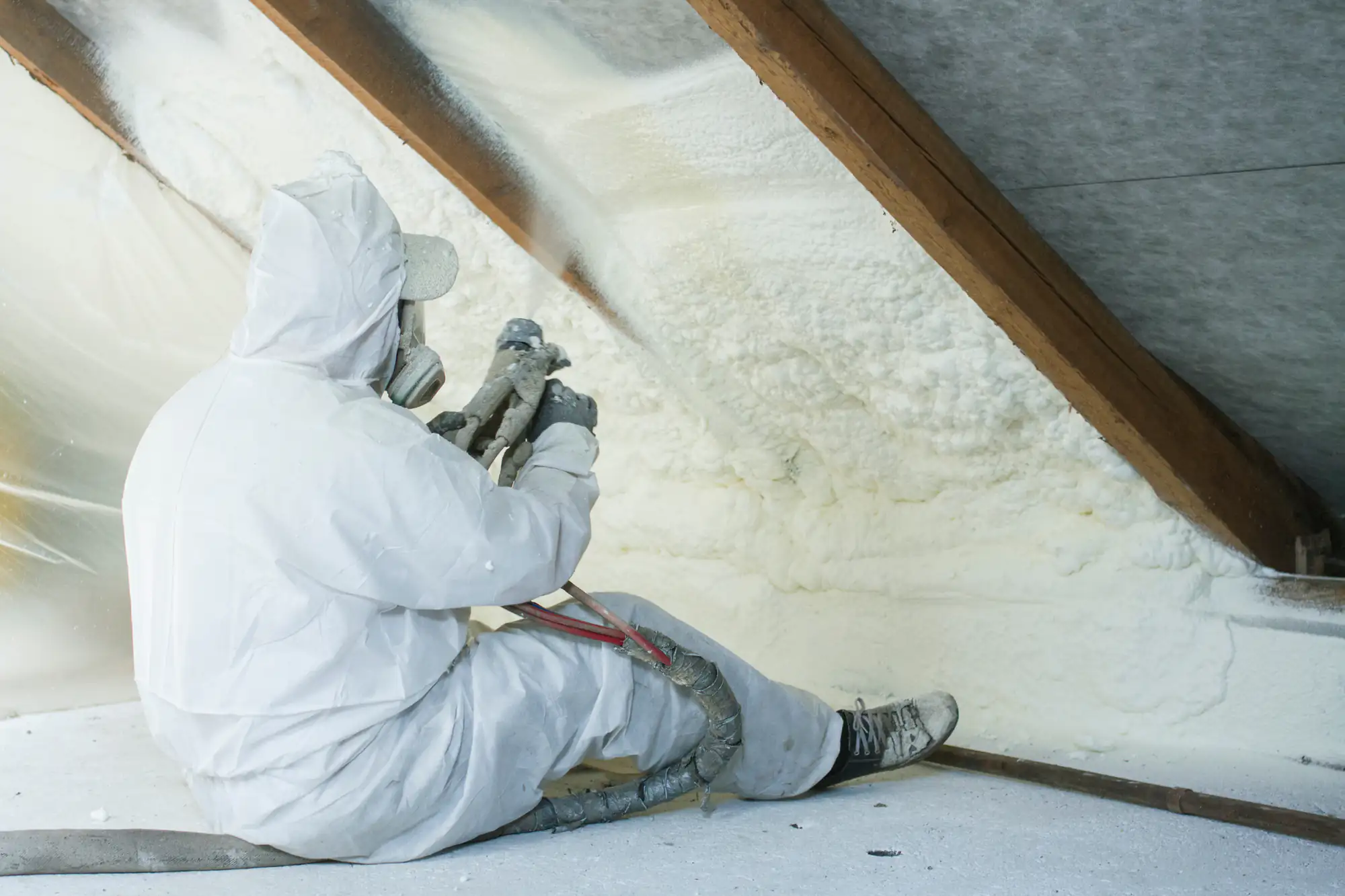
Once the substrate is confirmed sound and properly prepared, we apply spray polyurethane foam as a liquid that expands and cures into a seamless, rigid layer across the entire roof surface. Thickness is controlled by our applicator and calibrated to the slope and drainage requirements of your specific roof. After the foam cures, we apply a high-reflectance elastomeric coating over the top — this is what protects the foam from UV degradation and gives the system its long-term durability in Arizona’s intense sun exposure.
If you’re in a gated community like Litchfield Greens or The Village at Litchfield Park, HOA approval is part of the process before anything gets scheduled. Litchfield Park’s Building Safety Department at 214 W. Wigwam Boulevard also requires a permit when changing roofing materials, and we handle that on the front end — not as an afterthought. By the time installation day arrives, every box is checked and the only thing left is the work itself.
Ready to get started?
We handle both residential foam roof installation and commercial foam roofing in Litchfield Park and throughout Maricopa County. On the residential side, our work ranges from full foam roof installations on historic flat-roof homes near Old Town to foam roof repair services and SPF roof restoration on aging systems in established neighborhoods like Wigwam Creek and Sunset Terrace. For homes that need a full replacement, spray foam flat roof replacement can often be completed over the existing substrate — no tear-off required if the deck is structurally sound — which keeps costs down and disruption minimal.
On the commercial side, the case for foam roofing is straightforward math. A 20,000 square foot commercial building in Maricopa County can save upward of $8,400 annually after a foam roofing installation, with a payback period in the three-to-four year range. With the upcoming Litchfield Square development bringing over 240,000 square feet of new retail and dining to the area, and the commercial corridor along Wigwam Boulevard continuing to grow, commercial foam roof repair and new installation demand in this market is real and increasing.
Every foam roofing project we complete includes substrate inspection with thermal imaging, proper surface preparation, SPF application calibrated to your roof’s slope and drainage, elastomeric topcoat application, and final inspection. We also offer foam roof recoating and sealing services for existing foam systems that need a maintenance coat to extend their service life — typically every 10 to 15 years depending on the original coating thickness and UV exposure.
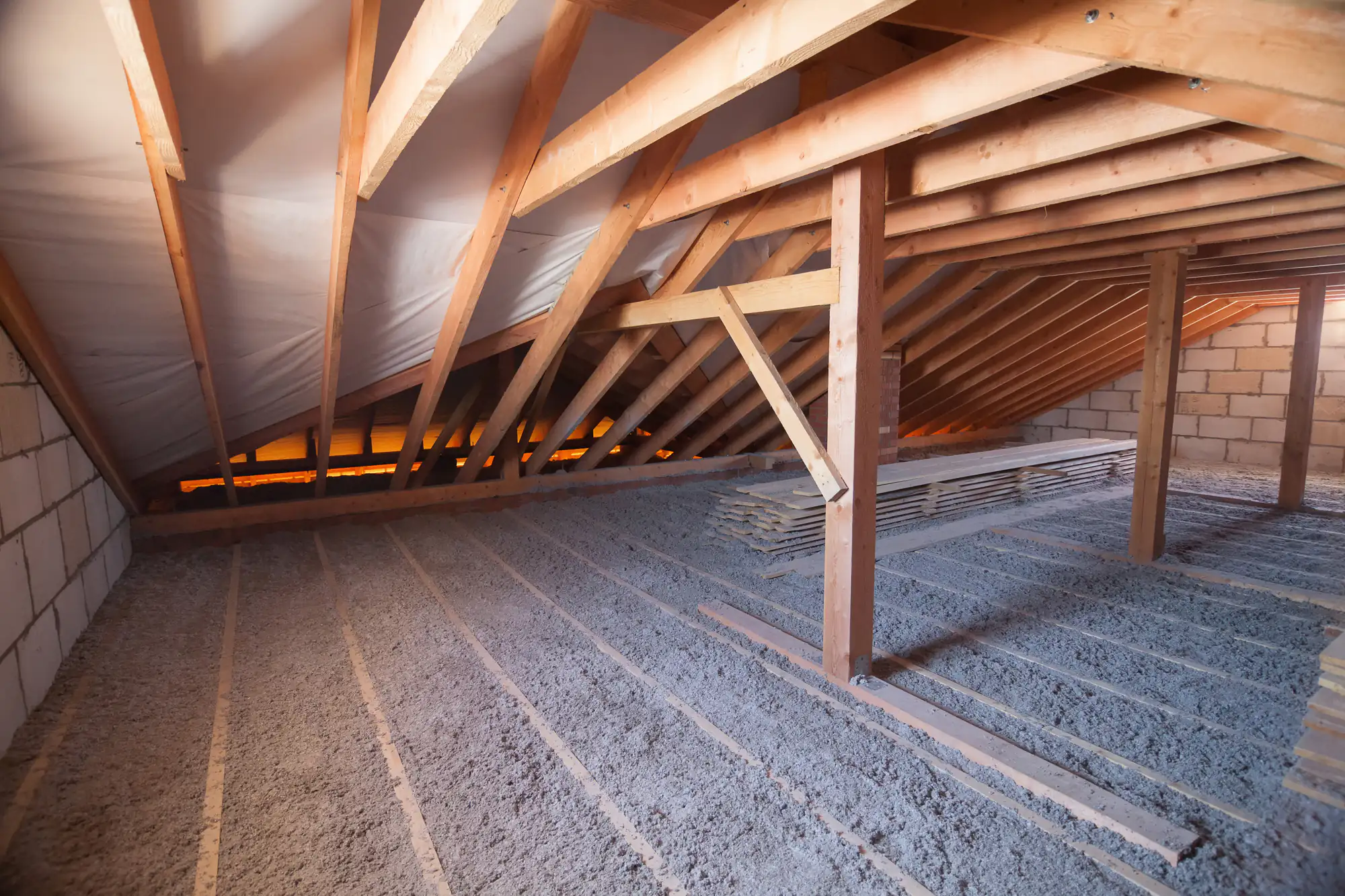
A properly installed and maintained spray foam roof in Litchfield Park can last 30 to 50 years or more. The key word there is maintained — foam roofing is a durable system, but the elastomeric coating on top needs to be reapplied periodically to protect the foam from UV degradation. In Litchfield Park’s climate, where roof surface temperatures regularly exceed 160°F during peak summer, that recoating cycle typically runs every 10 to 15 years depending on the original coating thickness and how the roof has been exposed.
To put that in context: asphalt shingles in the Phoenix metro typically last 12 to 15 years before heat degradation forces replacement. Over the life of a home in Litchfield Park, that’s potentially three or four shingle replacement cycles versus one foam roofing installation with periodic recoats. The long-term economics aren’t close.
In most cases, yes — and that’s one of the practical advantages of SPF roofing. If your existing flat roof substrate is structurally sound and free of trapped moisture, we can apply foam directly over it without tearing off the old system. This eliminates tear-off labor costs, reduces landfill waste, and cuts down on the disruption to your property during installation.
The critical step is confirming the substrate condition before anything gets applied. We use thermal imaging to identify hidden moisture in the existing roof before installation begins. This matters particularly for older homes in Litchfield Park — properties near Old Town that date to the mid-20th century are more likely to have moisture issues that aren’t visible from the surface. Applying foam over a wet substrate traps that moisture and creates a failure point. The inspection step isn’t optional — it’s what separates a foam roof that lasts 40 years from one that fails in five.
It’s one of the best roofing systems available for monsoon conditions, specifically because of how it’s applied. Every conventional flat roofing system — modified bitumen, TPO, built-up roofing — has seams, joints, or mechanical fasteners. Those are the points where water finds its way in during a hard monsoon storm, and Litchfield Park’s monsoon season delivers the kind of fast, intense rainfall that exploits every one of them.
Spray foam roofing is applied as a liquid and cures into a single, continuous membrane with no seams, no joints, and no fasteners. There’s nothing for water to penetrate. The foam also self-flashes around roof penetrations like HVAC curbs, vents, and drains — areas that are typically the first to fail on a conventional flat roof. For Litchfield Park homeowners with aging flat roofs who have dealt with monsoon leaks before, this is the most direct answer to that problem.
Many of Litchfield Park’s most established neighborhoods — including The Village at Litchfield Park, Litchfield Greens, and Wigwam Creek — are governed by HOAs with CC&Rs that regulate roofing materials, visible finishes, and coating colors. Whether a foam roof will be approved depends on your specific HOA’s governing documents, but foam roofing is generally well-suited to HOA compliance because the topcoat color and finish can be specified to match community standards.
The important thing is to get HOA approval before installation begins, not after. We handle the documentation and coordination needed to submit an HOA approval request properly — including material specifications, coating color options, and any other information your HOA requires. This is a step that gets skipped by contractors who aren’t familiar with Litchfield Park’s community landscape, and it creates headaches for homeowners when it is. We handle it upfront.
For a typical residential foam roofing installation in Litchfield Park, you’re generally looking at a range of $7,000 to $12,000 depending on the size of the roof, the condition of the existing substrate, and the thickness of foam specified. Larger homes or those requiring more substrate preparation work will fall toward the higher end of that range.
It’s worth framing that cost against what you’re actually buying. At roughly $960 per year in average energy savings for a Litchfield Park home, the system pays for itself in under four years on energy costs alone — and then continues generating savings for the next 30 to 40 years. Factor in the avoided cost of shingle replacement cycles, the reduced risk of monsoon water damage, and the 25-year workmanship warranty backing the installation, and the upfront number looks different. Financing is also available for homeowners who prefer to preserve liquidity while still moving forward with the project.
Yes, in most cases. Litchfield Park’s Building Safety Department requires a permit when roofing materials are being changed from what was originally installed. Switching from a conventional flat roofing system to spray polyurethane foam qualifies as a material change, which means a standard building permit is required before work begins. The permit office is located at 214 W. Wigwam Boulevard, and inspections are required as part of the process.
This isn’t something to navigate on your own or skip over. An unpermitted roofing installation in Litchfield Park can create complications when you sell the property, and work performed without the required permits can affect your homeowner’s insurance coverage. We manage the permitting process as part of every project — pulling the permit, scheduling inspections, and making sure the installation meets Litchfield Park’s adopted building code requirements. It’s not an add-on service; it’s part of doing the job correctly.
Other Services we provide in Litchfield Park