
Hear from Our Customers
The Buckeye corridor doesn’t forgive weak roofing. With over 121 days a year pushing past 100°F and roof surfaces regularly hitting 160°F, your flat or low-slope roof is under constant thermal stress from May through September. Spray polyurethane foam roofing — SPF roofing — addresses that directly. It cures into a single, seamless surface with no joints, no fasteners, and no seams for heat or water to exploit. The insulation value runs R-6 to R-7 per inch, which is the highest available for any roofing material, and it creates a continuous thermal barrier between the desert heat and the space below.
On the energy side, that matters more here than almost anywhere in the country. Arizona households pay roughly $100 more per month on electricity during summer than the national average, and a significant portion of that cost comes from heat moving through the roof. Foam roofing cuts cooling costs by 25 to 35 percent for most homes in this area. For a typical 1,800 square foot home in Allenville, that works out to around $960 per year in savings — with a payback period of under four years.
The Gila River corridor has its own relationship with water. The 1978 flood that reshaped this community is a reminder of what happens when water finds a weakness. A foam roof has none. Applied as a liquid and cured into one continuous surface, there is literally nowhere for monsoon water to get in — no seam, no joint, no penetration point. That is not a generic benefit. For people living near the Gila River in Allenville, it is a structural fact worth understanding.
We have been operating in Maricopa County since 1999. That means we were here long before Buckeye became one of the fastest-growing cities in the country, and we will be here long after the next monsoon season tests your roof. This is not a company that showed up after a storm chasing work. We have a track record, a local license, and a 25-year workmanship warranty that only means something because we have the history to back it up.
The Certified Master Roofer credential is not handed out with a contractor’s license. It requires demonstrated expertise in installation, materials, and the kind of judgment that separates a roof that performs from one that fails quietly until the damage is already done. We hold manufacturer certifications with GAF and Firestone, carry an Arizona ROC C-42 Roofing License — which you can verify at roc.az.gov — and explicitly list Allenville as a named service location.
We know the west valley. We know the Gila River corridor. And we know what foam roofing in Allenville, AZ actually needs to do to earn its cost.
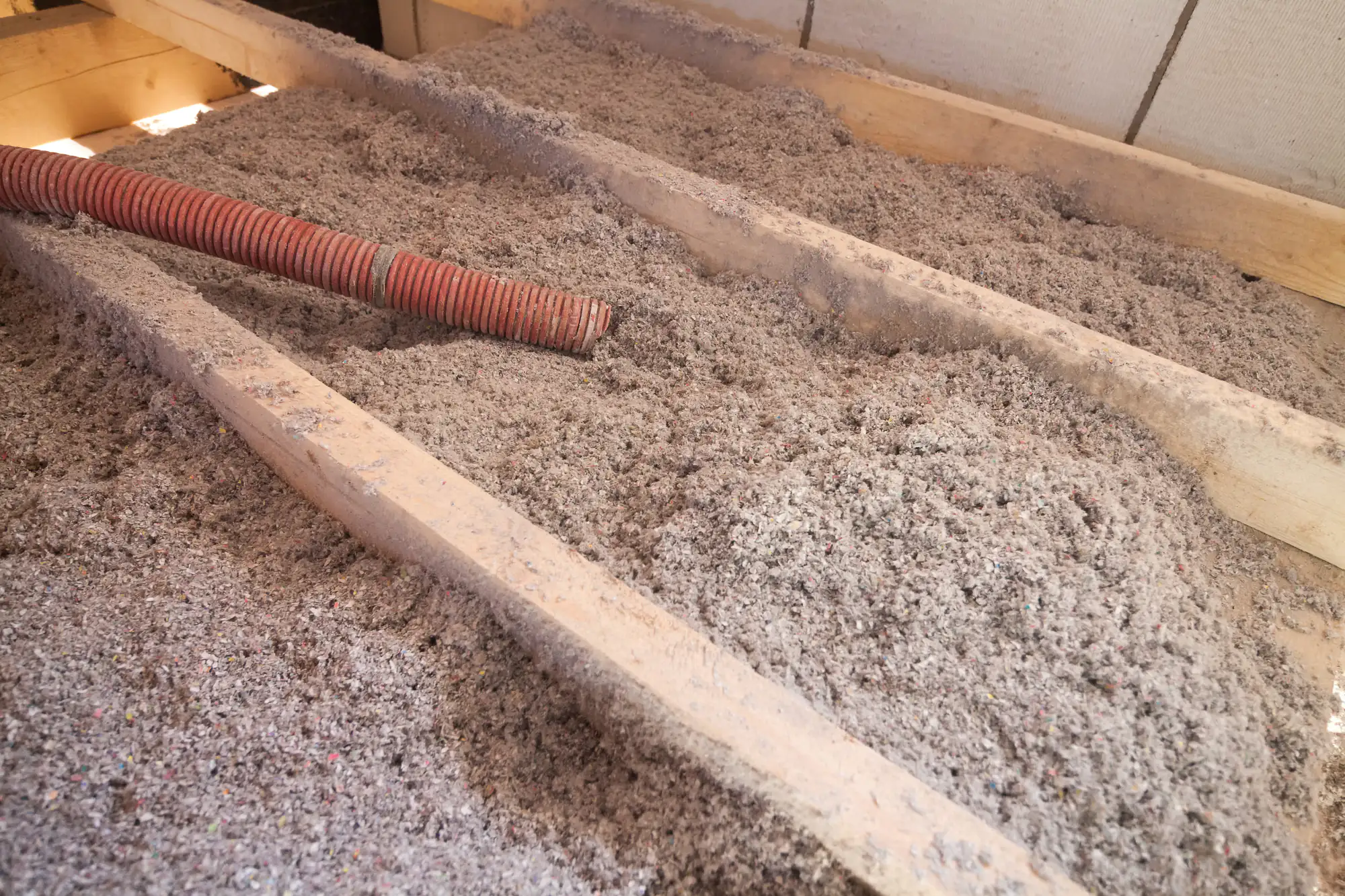
It starts with an inspection — not a sales pitch. The condition of your existing roof determines whether foam can be applied directly over it, which it can in most cases where the structure is sound. That matters because skipping a full tear-off saves thousands of dollars and keeps waste out of the landfill. If there is moisture trapped beneath your current surface, thermal imaging can detect it before anything goes down. That step alone separates a foam roof that lasts from one that fails from the inside out.
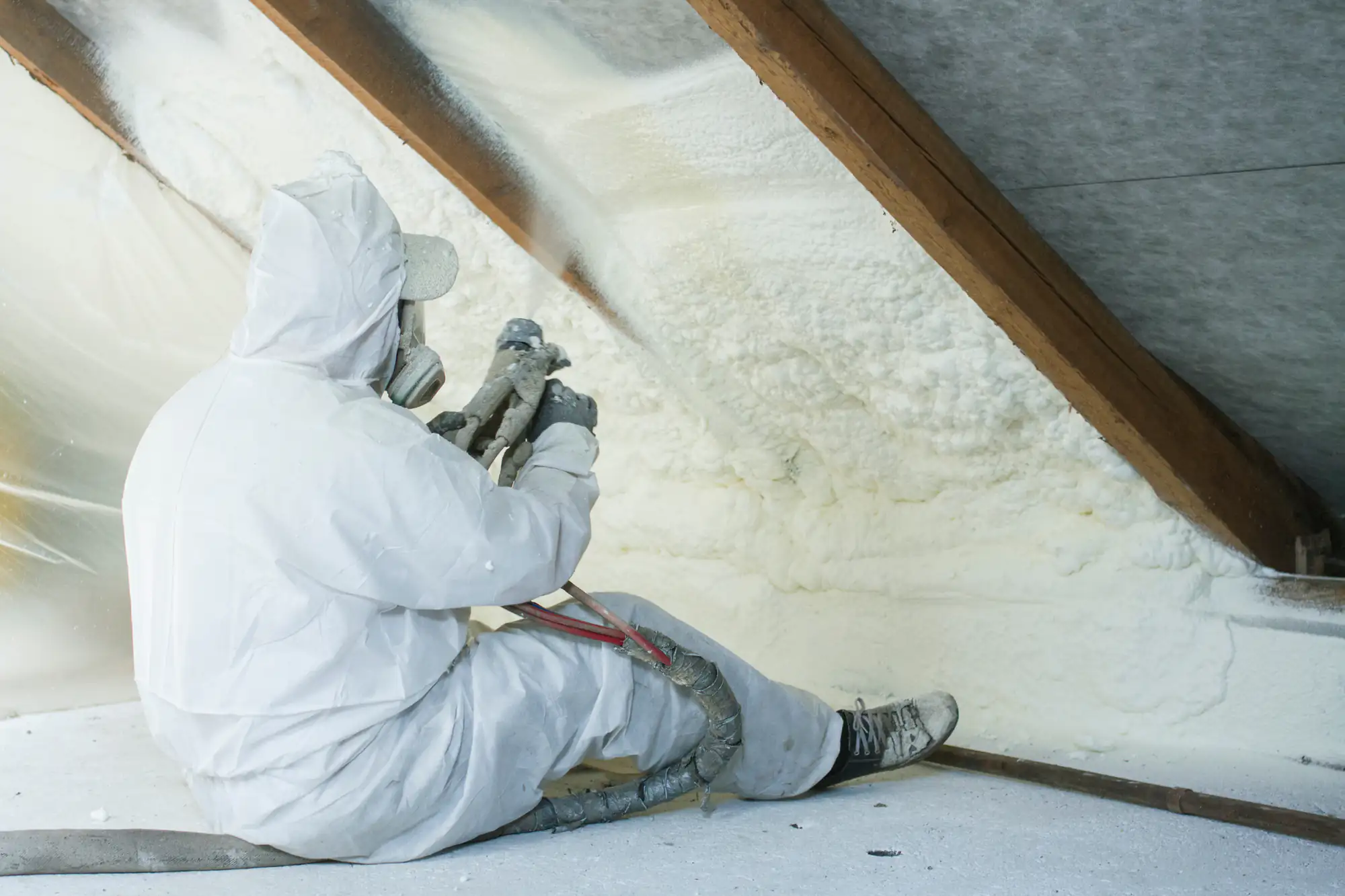
Once the surface is confirmed clean and dry, the spray polyurethane foam is applied in a controlled pass — thickness is calibrated to hit the target R-value for your specific roof size and layout. In Allenville and the broader Buckeye area, that typically means accounting for both the extreme summer heat load and the flat or low-slope roof profiles common to desert construction. After the foam cures, a protective elastomeric coating goes on top. That coating is the UV-sacrificial layer — it takes the punishment from Arizona’s intense sun so the foam beneath does not degrade.
Timing matters out here. The best installation windows in the Allenville area are fall and spring, when temperatures are moderate and wind conditions are manageable. Post-monsoon — October through November — is ideal. You have just seen how your roof performed, the weather has cooled, and conditions are right for a clean application. We also handle the permit process required by the City of Buckeye, so you are not navigating that on your own.
Ready to get started?
Foam roofing is not a one-size product, but it is a one-system solution that works across more roof types than most people realize. For residential homes in the Allenville and Conger area — where medium to large single-family homes with flat or low-slope profiles are common — SPF roofing delivers insulation, waterproofing, and longevity in a single installation. For the agricultural buildings, storage structures, and light commercial properties that still define much of the western Maricopa County corridor, foam can be applied directly over existing metal roofing without tear-off, adding insulation and a seamless waterproof surface to buildings that were never designed with energy efficiency in mind.
On the residential side, we install foam roofing systems for new flat roofs, aging membrane replacements, and low-slope applications where traditional shingles are not a viable option. Pricing for residential foam roofing typically runs $4 to $8 per square foot installed, and we offer financing for homeowners who want to move forward without covering the full cost upfront.
For commercial properties, the ROI case is even stronger. A 20,000 square foot commercial building in this area can see $8,400 or more in annual energy savings after foam installation, with a payback period of three to four years. Recoating every five to seven years — the recommended schedule in Arizona’s UV environment — keeps the system performing and extends the roof’s life well past 30 years. We handle both the initial installation and ongoing recoating for properties throughout Allenville, AZ and Maricopa County.
This is one of the most important questions to ask before choosing any flat roofing system in the Gila River corridor. Traditional flat roof membranes rely on seams, fasteners, and overlapping layers — all of which are potential entry points when monsoon rain accumulates on a roof and has nowhere to go quickly. Spray foam roofing eliminates that vulnerability entirely. It is applied as a liquid and cures into one continuous, monolithic surface. There are no seams. No joints. No fastener penetrations for water to find.
In the Allenville and Buckeye area, monsoon events can deliver intense, concentrated rainfall in a short window — the kind that pools on flat surfaces before it drains. A foam roof handles that standing water without the risk of infiltration that plagues seamed systems. Combined with the elastomeric topcoat, which is fully waterproof and UV-resistant, you get a system that is specifically well-suited to the demands of desert monsoon season. If your current flat roof has been showing stress after summer storms, that is worth paying attention to before the next season arrives.
A properly installed and maintained spray foam roof can last 30 to 50 years or more. The key word is maintained — and in Arizona’s UV environment, that means recoating the protective elastomeric layer every five to seven years. That recoating is what keeps the foam beneath from degrading under the sun. Each time you recoat, you are essentially renewing the roof’s protection and extending its warranty. It is a predictable, manageable cost compared to the alternative.
For context, traditional asphalt shingle roofs in the Buckeye and Allenville area typically last 12 to 15 years before Arizona’s heat forces a full replacement. Over a 50-year period, that means replacing your roof three or four times — each time at full installation cost, plus the disruption of the project. A foam roof with periodic recoating costs significantly less over that same period. For homeowners in the Allenville and Conger area who are making long-term decisions about their properties, the lifecycle math strongly favors foam.
For residential foam roofing in Allenville and the surrounding Buckeye area, you are generally looking at $4 to $8 per square foot installed. For a 1,500 to 2,000 square foot home, that typically puts the total project in the $7,000 to $12,000 range depending on the condition of your existing roof, the thickness of foam required, and the coating system specified. If your current roof needs surface prep or minor repairs before foam can be applied, that can affect the final number.
The important thing to understand is what that investment returns. At $960 per year in average energy savings for a home in this climate, the payback period is under four years. After that, every summer is cheaper than it would have been with a standard roof. We also offer financing, so if the upfront cost is the sticking point, that does not have to be the reason you wait another monsoon season with a roof that is not performing. Get a quote, run the numbers, and make the decision with real information in front of you.
In most cases, foam can be applied directly over a structurally sound existing roof — and that is one of its most practical advantages. Skipping a full tear-off saves thousands of dollars on labor and disposal, and it means the project is completed faster with less disruption to your home or business. The key requirement is that the existing surface is dry, clean, and free of trapped moisture. If moisture is present beneath your current membrane, it needs to be addressed before foam goes down — otherwise it creates a problem that is difficult and expensive to fix later.
We use thermal imaging during the inspection phase to detect any moisture that is not visible to the naked eye. That step is not optional — it is how you confirm the roof is a good candidate for a direct overlay. In the Allenville area, where many homes have flat or low-slope roofs that have been through multiple monsoon seasons, this inspection often turns up moisture in corners or around penetrations that the homeowner did not know was there. Finding it before installation is the difference between a foam roof that performs for decades and one that fails early.
It is one of the best options available for commercial flat and low-slope roofing in this part of Maricopa County. The agricultural and light industrial buildings that populate the western Buckeye corridor — many of them with large metal roofs that were never designed with energy efficiency in mind — are ideal candidates for commercial foam roofing. Foam can be applied directly over existing metal roofing without tear-off, adding a seamless waterproof surface and significant insulation to buildings that are currently losing a substantial amount of conditioned air through the roof.
For a 20,000 square foot commercial building in the Allenville area, the energy savings from foam roofing can reach $8,400 or more per year. At that rate, the system pays for itself in three to four years and continues generating savings for decades after. The seamless construction also eliminates the leak risk that comes with fastener-based metal roof systems, which tend to develop penetration points over time — especially after the thermal expansion and contraction cycles that come with Buckeye’s temperature swings. If you own or manage a commercial property in this corridor, foam roofing is worth a real conversation.
This is the right question to ask, and the answer is straightforward. In Arizona, installing spray foam roofing requires an Arizona ROC C-42 Roofing License — a classification that specifically covers urethane foam and roof coatings applied above the deck. You can verify any contractor’s license status directly at roc.az.gov before signing anything. It takes about two minutes and tells you whether the contractor is currently licensed, bonded, and whether they have any complaints or disciplinary actions on record.
This matters more in the Allenville and Buckeye area than some people realize. After major monsoon events, unlicensed out-of-state contractors move through Maricopa County offering fast, cheap repairs. Some of them do foam work without the credentials required to do it legally in Arizona. If an unlicensed contractor installs your roof and something goes wrong, your homeowner’s insurance may not cover the damage — because the work was not performed by a licensed contractor. We hold the Arizona ROC C-42 license, have been continuously licensed in Maricopa County since 1999, and carry the Certified Master Roofer credential on top of that. Check the license. Then compare.
Other Services we provide in Allenville